Monday, 16 December 2013

Film Opening Analysis-Goodfellas

Goodfellas is a film released in 1990 and directed by Martin Scorse. The film follows the rise and fall of Lucchese crime family associate Henry Hill and his friends over a period from 1955 to 1980.


VISUALS-
0s-12s- Warner Bros Pictures
14s-17s- An Irwin Wrinker Production
17s-20s- A Martin Scorse Picture
20s-39s- Main characters ames swipe quickly across screen, fade, and then re-apper in the middle of                  the screen 
39s-43s- This film is 'Based on a true story'
43s-53s- Vehicle Driving (camera passes the side of the car and then passes it)
53s-57s- New York, 1970
1m-1m20s- 3 men in the car, 1 is driving the other 2 are asleep, they suddenly wake up suspecting that                   they have a burst Tyre(med-close up)
1m20s-1m29s- All 3 character get out to check the rear Tyre, their faces are shown by red reflection                          of the rear brake light (mid shot)
1m29s-1m33s- Zoom in on car boot, it is shaking as if someone's trapped inside
1m33s-1m43s- Pan of characters getting their weapons out 
1m43s-1m48s- Cut-in of hands unlocking the boot of the car and revealing a blood coverd man barely                          moving and mumbling incoherently,
1m48s-1m52s- Character erpeatedly stabs the man in the boot with a knife
1m52s-1m54s- Reaction shot of third character
1m54s-1m55s- First character gets his gun and starts shooting the man in the boot
1m55s-1m56s- Reaction shot of third character
1m56s-2m- Shooting

SOUND-
12s-53s- The sound of multiple cars going by
57s-1m13s- Dialogue (all characters have New York accents)
57s-1m20s- Sound of cars fades out/ slows down
1m20s-1m29s- Footsteps and car door slamming shut
1m29s-1m43s- Quiet bangs from the boot
1m35s-1m43s- The grunts of the gangsters aswell as the character in the boot
1m56s-2m- Shooting

Things it does WELL
> it sets the scene with 'new york 1970' 
> it intorduces the director
> it introduces three of the main characters onscreen 
> it introduces the director first
> the lighting used sets the scene of the film well

Things it DOESN'T do well-
> It says where it's set but gives us no real example of this

MacGuffin/ Connotations

Connotations-

The non-literal meaning we interpret of something e.g. a box can connote feelings of, excitement,suspense,anticipation and fear.

MacGuffin-

A MacGuffin is a plot device in the form of some goal, desired object, or other motivator that the protagonist is willing to do and sacrifice almost anything in order to pursue, protect or control, often with little or no narrative explanation as to why it's considered so important e.g. the feather in 'Forest Gump'

Wether the audience should care about or identify with a MacGuffin in a story is open to much debate among producers of fiction.


The Feather in 'Forest Gump' Connotations-

>Flying---Journeys,
>Light,
>Airy,
>Softness,
>Superstition,
>Feather Boas,
>Pillows,
>Birds of a feather.


Film opening analysis- The Wedding Date

The Weding Date, is a film directed by Clare Kilner that came out in 2005. It follows single-girl Kat Ellis (Messing). Anxiety causes her to hire a male escort (Mulroney) to pose as her boyfriend at her sister's wedding in an attempt to dupe her ex-fiancĂ©, who dumped her a couple years prior,which proves to be her undoing.


VISUALS-
0s-21s- Universal logo
21s-29s- Golden Circle Films
31s-35s- 'Universal Films and'
36s-40s- Golden Circle Films present
41s-45s- A 26 Films production
45s-1m3s- Wedding invite rotates into focus
55s-1m3s- Rose petals fall as camera zooms out
1m3s-1m18s- Newspaper cuttings appear onscreen
1m11s-1m15s- In association with Vision View LTD.
1m18s-2m-Shots of NYC fade into one another
1m19s-1m23s- Debra Messing
1m26s-1m30s- Durmot Muloney
1m34s-1m37s- The Wedding Date
1m51s-1m53s- Amy Adams

SOUND-
0s-21s- Universal soundtrack
40s-2m- Backing instrumental music
1m31s-1m40s- Telephone rings
1m40s-2m-Talking ( A man's voice is leaving a message on the woman's answerphone)

Things it does WELL-
>It introduces all of the starring actors that appear in the film
>It sets the scene by having the varying shots of iconic New York landmarks
>It links well with the title by having the invite and provides context with the answerphone message.

Things it DOESN'T do well-
>It doesn't introduce the characters at all
>It doesn't conform to the convention of introducing the director in the opening two minutes

Saturday, 14 December 2013

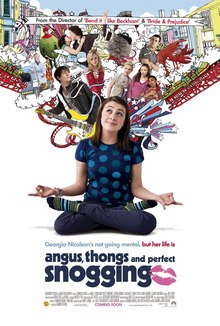
Film Opening Analysis-Angus, thongs and perfect snogging

Angus, Thongs and Perfect Snogging was a film released in 2008. Directed by Curinder Chanda the film is an adaptation of the book series written by Louise Rennison. The story centers on a 14-year-old girl who keeps a diary about the ups and downs of being a teenager, including the things she learns about kissing,boys and of course, her dear cat Angus.


VISUALS-
0s-19s- Paramount logo
19s-32s- Nickelodeon Logo
32s-50s- Georgia is walking along the pavement whilst her dad drives              along side her in the car
50s-55s- Paramount pictures presents appears over footage
55s-1m - A Gurginda film 
1m1s-1m45s- Georgia arrives at the party and is stood up by her friends
1m45s-2m- Georgia runing home from party through Eastbourne

Sound-
16s-1m45s- Background Instrumental Music
1m45s-2m- Changes Music ( She's so lovely- Scouting for girls)
16s-1m45s- Dialogue

What it does well-
-->It sets the film well, with the running through the town scene.
-->The film well incorporates lines from the books.
-->They folow all of the main features of a film opening successfully

what it doesn't do well-
-->They don't introduce all of the main characters.
-->They don't make reference to any of the starring actors that are in the film.


Sunday, 8 December 2013

film opening analysis- Love Actually

'Love Actually' is a film released in 2003 and directed by Richard Curtis. It follows the lives of eight very different couples, dealing with their love lives in various loosely and interrelated tales all set during a frantic month before Christmas in London, England.


We were set the task to analyse the opening two minutes of the film. In order to do this we split the analysis into the visuals and the sound of the scene.


VISUALS-

0s-23s- Universal logo 
23s-38s- Studio canal
38s-49s- Working title logo
49s-1m54ss- shots of reunited fade up from black then fade into one another, at the 1m9s mark it then fades to black 
51s-54s- Universal pictures and studio canal present
54s-59s- Working title productions
59s-1m2s- In assoiation with DNA films

1m50s- Love actully is all around fades onto the screen
1m58s-2m- is all around fades out leaving just the title 'Love Actually' alone on a black screen 

SOUND-

0s-23s- Unversal sound track
23s-38s- Studio canal soundtrack 
49s-2m- MUSIC- relaxing/happy- NON-DIAGETIC sound
1m13s-1m58s- Hugh Grant speaking 

Things it does well-
I really enjoyed how the footage mimicked the speech Hugh Grant was making, it provoked an emotional response from the audience as well as really emphasising the point that the person speaking wants to make

Things it doesn't do so well-
There are very few things that you could call the opeing out on however it doesn't keep to the conventions expected of a film opening e.g. Introducing the actors, Introducing the director, setting the scene. 

Film Openings- Captain America

It's 1942 and America has entered WW2, and sickly but determined Steve Rogers is frustrated after being deemed unfit for military service. Rogers then volunteers for a top secret research project that turns him into Captain America, a superhero dedicated to defending USA ideals. the film starred Hollywod greats such as; Stanley Tucci, Chris Evans and Samuel L. Jackson. It was dirceted by Joe Johnston, and was first released in July 2011.


In order to deconstruct the timeline I split the opening into two parts, the VISUALS and the SOUND.

VISUALS

0s-18s- Paramount logo
21s-33s MARVEL logo
35s- Fade up from black to snow fogged screen
47s- Headlights gradually appear
52s- Headlights expand to full screen
54s-POV shot from the driver's point of view
1m1s- Man comes into shot holding a red light
1m12s- The two characters from the car are introduced
1m20s- Two shot of the men from the car
1m26s-Mid shot that includes al three characters
1m28s- Wide shot of the snowy setting
1m32- Medium close-up
1m34s-Two shot
1m38- Mid shot behind characters
1m41s-Zoom in on the  spaceship
1m47s-Pan up
1m51s-Zoom into character
1m52-Shot of the spaceship
1m59s- The camera zooms out
2m-Shot of a car tyre

SOUND

0s-18s- Paramount soundtrack
1m12s-2m- Dialogue

It's clear that the focus of the opening is to set the scene and really help the audience to grasp the concept of what's happening/ the econtext of the scene (as with any film opening). They do this by having detailed shot of the setting (wide shot of snowy plane), and by focusing on the dialogue between characters and not adding in any extra background music so the audience remain focused on what is being said.

WHAT IT DOES WELL-

It successfully  uses zoom a technique that's not really seenin film but this helps us to really understsnd the gravitas of the situation and grasp the size of  the spaceship. The way in which they use several camera shots in order to successfully set the scene is another positive of this particular film opening. In addition it uses dialogue to provide the audience with a solid context that is backed up by the footage used.

WHAT IT DOESN'T DO WELL-
In my opinion the opening spends too much time on the car travelling through the snow and not  on developing the story behind the spaceship. I understand that they want to create enigma however it doesn't work to the extent that they want it to.

Saturday, 23 November 2013

Expanding Time

Expanding time is when you add shots into a sequence that you might not necessarily need but they help to add to the narrative and engage further with the audience to deepen the piece and tell the audience everything to do with the back story of the film.In real time the process your showing on screen might only last half a minute. But the editor can build up tension by including shots of the person's eyes, taping fingers (to show impatience) etc..., drawing the scene out to a minute or more. We are looking at 'film' time, not real time


imgres.jpg

imgres.jpg


- Adding shots like these provided the audience with more elements with which to understand the film in a greater depth and feeling.


To learn about this we completed the same 'Mad Max' we did with shrinking time. The difference being that this time,  we expanded time by adding in close up shots of aspects like his hands or his eyes to create more tension/ overall emotion to the scene.


finally we applied this process to our prelim tasks by adding in different shots and adding in more time between cuts we spread the clip out and created more tension at certain key points in the film.

Enigma

In Today's lesson we looked at the use of enigma in cinema. to begin with we did a task that looked at the connotations that go along with enigma and came up with this list;
>Mystery,
>Curiosity, and 
>Questioning the unknown,

we were also asked to define it, Mr Lucas showed us the dictionary definition:
1-A puzzling or inexplicable occurrence or situation,
2-A person of puzzling or contradictory character 
3-saying, question, picture, etc., containing a hidden meaning

and then we had to come up with our own;
An enigma is something that is puzzling, ambiguous, or hard to work out. Specifically it's a mystery created byhaving an object, person or phrase, that's hidden fro the audience and will not be revealed until it become integeral to the story line. once this has been done the enigma no longer exists.

we then went on to discuss how you might go about creating enigma and came up ith this list;
>Editing,
>sound
>the uknown
> framing
> Hidden Meaning
> introducing foreign concepts to the audience,
>subverting/changing convention or narriative
> camera shots
> Mise-en-scene

Finally we put this into the context of our final task, and we looked at how eniga had been created in the first 2 minutes of 'The Bourne Identity'. It really gave me a clear idea about what i needed to do if i wanted to create an enigma when it came down to making our final task.

To add context with our film openings task we recently watched, broke down and analysed the openg 2 minutes 20 seconds of the film 'Inglorious Bastards' it used enigma well to introduce the Nazi characters  as it gave them an air of mystery and curiosity as the audience don't know who they are they just hear the sound of their Motorbikes. I explore this whole opening/effect of enigma in a differnet blog post, as shown here: ENTER THE LINK FOR THE BLOG POST FROM 25-11-2013 LESSON HERE

Wednesday, 20 November 2013

Shrinking Time

To me shrinking time is cutting down the footage for a scene into the key elements required to still be able to tell the story. This is done through quick cuts that fasten the pace as well as creates mystery and tension. The most common use of shrinking time is in action/thriller movies when they want to interest the audience without telling them the whole thing.

There are a lot of films that use this technique, but the ones that we studied included mad max and the Bourne Identity.

Before we watched the mad max clip we went over some of the stills any ordered them, then we went        Back and in my group we worked on eliminating some parts so that we shrunk the sequence. This created a faster pace for the sequence whilst still telling the story and giving more mystery to Max !

Overall, shrinking time makes the audience feel a rush and absorbed into the scene. It also establishes not only the mood but also the pace and genre of the piece.

Tuesday, 19 November 2013

The Film Making Process

Before we started any other tasks we we given a challenge to think of as many film process we could and order them into the film making process. overall the film making process can be broken down into three main categories: Pre-Production, Production and Post-Production.

Pre-production 
This is before the filming starts, features of Pre-Production include; 
>Idea/concept of the film had been shown, 
>Writing the script, 
>choosing a location to film
>Budgeting the film so they know how much each person working on the fil would get aw well as how much they could spend on buying props and costumes etc.
>Cast the actors and actresses, 
>Find a camera crew, 
>rehearse with the cast.
  - Rehearsals are an element of Pre-Productions because the script could still be edited further as they go on/ before filming actually begins.


imgres.jpg

Production-
Production is basically when filming is taking place. It's where the director, costume designer, hair and make-up and camera and lighting crew all come together and play a big role in the overall make up of the film. It includes;
>Filming what needs to be filmed on time,
>The correct lighting to incorporate the sunshine or the gloomy rainy day, setting the overall tone of the piece.
>Making sure the clothing is realistic to the script/film, 
>Make-up and hair,
>Song selection, 

imgres.jpg
 
Post-Production
>Editing
>This is where the trailers come out and even before the film comes out;
>we see reviews in the newspapers,
>We market it by going to press conferences,
> We set a premiere date where all the people that helped make the film and were in it get a chance to meet fans and watch the final film before it's released to the public.


imgres.jpg

Technology

Technology is a mixture of both the physical equipment that you use as well as the technology you use for editing, colour grading, clip resolutions etc.

     Camera (Shots)We use different camera set ups and shots to create/capture moving images in a sequence. they set both the mood and pace of the piece that you're creating, so they are vitally important.·         Final Cut ProFinal Cut Pro was something that I had never used before so I needed a lot of help in order to grasp the technology. In short final cut pro was the software used to edit the raw footage that we had filmed.·         ‘Apple Software’I am acustomed to using laptops that have windows software so I was not very familiar with the ways in which to use an apple mac at first.
           YouTube
YouTube is a website that the general public can use to upload videos to. These videos can be accessed all around the world making it a convenient source. we use it with our AS media studies so that we can get outside feedback and it means we can use our work on different websites/ share it around to get the best audience for it
·         Blogger
Blogger is a website used to blog your initial thought and ideas, this is then exposed to the public who have the choice to either view/read your posts, comment on your blog or follow you. we use it to document our progress through the AS course, showing people what we're up to at he moment/ what we have done so far,

Monday, 18 November 2013

Match On Action

Definition:
Match on action is a very simple but essential technique, where the perspective of the camera changes during a scene and the scene continues to flow.


As a class we came up with the definition of match on action below.

Class Definition:
Match on Action is the sequencing of events in chronological order to maintain continuity so the narrative can be followed. This is done by matching the footer of one scene to the header of the next.

After going through definitions in class we did a practical that included two people throwing and catching a ball. In the practical we had around 20 minutes that created a sequence with at least four different types of shots from different angles. We were required to cut them together using the iMovie on the iPads.

After completing this task we sat down and watch them both, whilst doing this we analysed them and talked about what we did well as what could have of been done better to iprove match-on-action i the sequence.

to end the lesson we worte down our ideas on match on action, as shown in the picture below:


Wednesday, 6 November 2013

preliminary task

Our prelim task was the first time that we had to construct and film in a group without guidance from the teacher. This was in order to learn through our mistakes we made and build up our skills so that our final piece would be even better. Initially, we had no ideas on where to start, so as a group we broke it down into parts. 


Pre-production- 


We decided to start creating our piece by following the structure of the film making process that we had created previously. We decided to come up with some ideas from the brief we were given as to what genre,character types we wanted etc. We decided that we were going to make our film based on action (spy) genre. 
We started to storyboard our initial ideas by including shot types and character positions. We then scripted the scenario, this was mainly between the Head agent and one of the agents, as we chose to have one 'prim and proper' agent and another that was more casual and laidback.
Before we started filming we had to choose the actors to play the parts of the characters. We decided to use ourselves in the film as this means that we don't have any worries about whether the other people can attend all of the filming sessions. However, as the head agent we decided to use a teacher at our school as she fitted the role of a mature, intelligent  person that we needed for the role.

production


In the production stage we used the Canon camera to capture the shots that we had storyboarded. This was harder to complete than we expected, this was because what we could picture in our minds was hard to produce through the lens. During this stage we decided to capture extra shots than we needed so that when it came to editing we had all the footage that we needed. To capture this footage we used a few camera accessories. These were the three lenses, the steady cam, the mic and the tripod. By using these accessories we were able to capture a good, steady image.


Construction and Editing-preliminary task


We started to compose our film using  final cut pro to edit the footage we'd collected in the production stage. We had to ensure that we maintained good match on action throughout the piece which proved to be harder than we thought it would be.
 The first piece of this sequence had fantastic match on action which we were really pleased with, however as we were adding in the rest of the footage and we realised that we had parts of the footage we needed missing, this therefore meant that we had to go out and re-shoot
When we were told us that our preliminary task had to include shot, reverse shot, we noticed that our piece didn't contain this and that we weren't sure how to include it in this scenario as the the two characters didn't talk to each other only to the head agent. After talking to our teacher he said that it was our decision what we did next but suggested that we start again as we made our storyline unnecessarily difficult. 

STARTING AGAIN...

 Starting the process again we began with story boarding. The sequence we chose was simple so that we could manage to do it all in time for the deadline, but still included all the essential skills(match on action, shot reverse shot.) 

Scripting and the shot list was easier to complete this time as we had already been through the process so we knew what we were doing. Additionally, this meant that we could get it done much faster than before. 

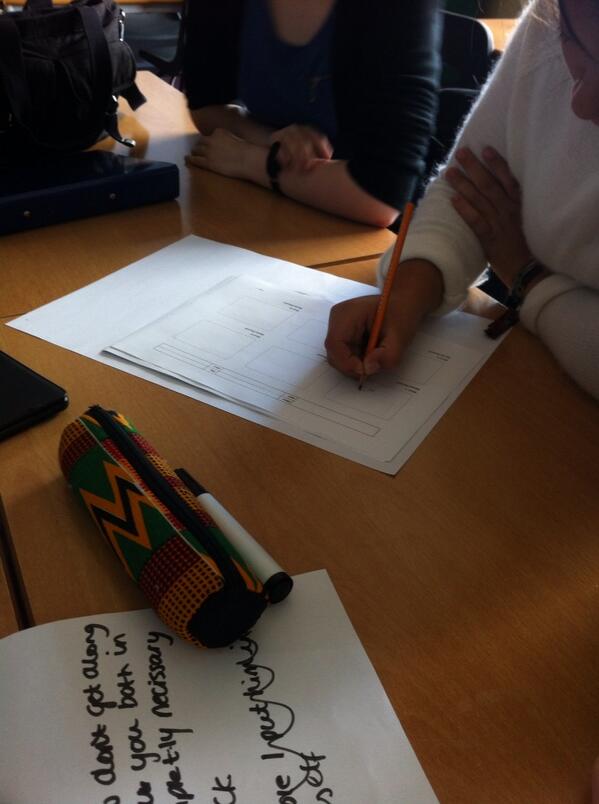
That afternoon we went out and got all the footage that we needed and also got some extra shots so that we knew we would definitely have enough to make the film work and include the key requirements. We decided to film in the sixth form block as the table set up and room structure was perfect for the look we were trying to create in our film. 
Embedded image permalinkWe then went back to the media suite to encode our clips using MPEG Stream clip so that we could easily, get on with putting the clips together and edit it. 

We were able to slot the clips together using Final cut pro and cut in parts of clips to create the shot, reverse shot. To create the match on action we just had to make sure that when we cut to another clip that everything in the frame was the same as in the last shot. 

After we had finished putting the preliminary task together we created some rolling credits saying which of us did what parts in the film making process. We worked out how to do this using trial and error, which helped us to remember how to do it in our final task. 

Below is our final preliminary task:


I enjoyed completing this preliminary task as it allowed me to work out the film making process on my own and gave me some keys skills for the final piece. It also 
will help me to remember my mistakes and not make the same ones in the final piece. Furthermore, it helped me work on time management and see how much time i would need to input. overall, I am pleased with the outome of the preliminary task as it includes the key skills that we needed, works well all together, and looks good.

Wednesday, 30 October 2013

Shot Types

there are several shot types that you can use in film. most of the are listed here:

http://www.mediacollege.com/video/shots/

or there is a key list of the most commonly used such as those listed in the video here:


The shot you use can determine how the audience perceives your piece, whether you use a low angle to give a character power or a high angle to take it away. 
Context Examples :
> We used a low angle mid length shot of feet walking along the corridor to give power to the character with the briefcase.

it can also be used to portray how the conversation is set out between a group, how the power balance is set or the general emotion/feel of a piece.
Context Example:
> We used close ups on the faces of the two characters involved in the conversation to show the emotions
>we used a high angle down shot from the P.O.V of the person who carried in the briefcase to shoe that they had the power in the conversation.


CREATIVITY


Initial thoughts-
My initial thoughts were that creativity had to be origional and never before seen. however, when we talked in class we saw how much of our inspiration had been inspired by others being inspired ( i know it's a bit of a mouthful but go with it!) so it wsan't really about reating something new but more about seeing something that people think is complete and then improving on it.

Our definition of creativity-
An aim to explore expression and external influences(e.g. upbringing,surrounding environment and existing products) that don't necissarialy need to be origional. to do something you don't see everyday, that provokes a reaction and solves an existing problem.

We also studied 4 questions to do with creativity and these were our answers:

1) What is your inspiration? where does it come from?
> you can be inspired by anything
> the things around you
> other people
> what other people have already done
> movies, people, music

2) How can you develop your creativity?
> by collaberating with other people
> by building on what you hav done before
> by finding inspiration
> trying to be different
> thinking differently ( trying to find a solution to something that doesn't yet have one)
> by thinking outside of the box

3)Is creativity a skill? can it be developed?
YES-
> as you develop creativity you ideas become better
> the more you see as you grow, can develop new ideas and also improve your creativity
> you can develop creativity by using your imagination, everyone's creativity is different in their own way.
NO-
> it's something that is there, and is not a skill that can be improved upon.creativity is with in your perception.however,it can be developed by inspiration.

4)When are you most creative?
> When you have just woken up ( the alpha stage)
> In you dreams
> When I'm listening to instrumental music
> Just before i go to sleep
> ANYTIME

Breakdown/describe the creative process when you wen to make you first short film, Where did your creative ideas come from?

I first listed all of the ideas and thoughts that i had when i thought about creativity, i then mapped them and wondered how easy it would be to do these on my phone e.g. what different elements would I need to include to give it the right feeling. We then discussed as a group, what sounds we wanted it to have, where we wanted to film, and what point of view it was going to be from. the final 'Pre' element was filming the different shots that we needed in order to meet the brief that we had been set. We looked at examples of the different shot types that we used e.g. Pulp Fiction, to see how we could 'style the scene'. we did this through listing the shots and story boarding how we wanted them to all look.


Sunday, 13 October 2013

Shot, Reverse Shot


Definition-
Shot reverse shot is a film technique where one character is shown looking at another character (often off-screen), and then, the other character is shown looking back at the first character. Since the characters are shown facing in opposite directions, the viewer assumes that they are looking at each other.

The process to create it-
we saw some still of the scene before creating it so as a natural assumption we used some of the same shots which lead to a natural process as these two shots comined with a master shot ,( both of the acctors in the frame talking across a table, the most common when filming a direct conversation) makes up the shot, reverse shot.

The effect-
The three differnet parts allow the audiene to know more about the cene than they would think. th aster shot sets the scene telling the audience where they are. then the switch to close up shots which tell us what their actual emoions are aswell as giving us a good visual on the individual characters.


review on the first edit of our prelim task


What we have learnt how to use in regards to technology:
> Different camera shots( in our piece we've used a whole rage of shot types. These include, wide, close up and panning shots)
> Final cut pro (we learnt how the render, how to change raw footage into format that would be easier to ues of final cut pro and how to perform basic funtions like inputting and cutting footage on final cut pro.)
> Continuity
> Use of Apple software
> Exporting video from final cut pro
> Linking headers and footers with match on action
> Linking different shot types
> How to get the lighting right for the shot
> How to set up and use a steadycam
> How to change the lenses and generally use a canon camera to optimize the shot type that you want (e.g. 35 mm lenses for a wide shot)

What new theory techniques have we learnt to use:
> Script writing
> Storyboarding
> Shot type lists
> Shooting in the right location
> Planning costumes to put the characters across in the right way
> Dressing the sets right
> Using free time effectively

Questions:
> How to colour grade a video?
> How to blend sound over video before the picture comes in?
> How do you get special effects on Final cut pro?
> How do we create a split screen on Final cut pro?
> How do you layer in and cut music to where you want on Final cut pro?


Thursday, 10 October 2013

Romantic Meal


This is a romantic meal scene. This is another part from the mise en scene task that we had to do in our last lesson with miss warner .

The first aspect of this would be the props the general props e.g. Plates, cups, table+chair layouts, they obviously show that this is a restaurant scene and then the low lighting and candle make it seem more romantic. 

If I was to improve it then I would have no natural light on it then I would light the candle as it would make it seem more "intense" and thus more romantic. 


Re-film 10-10-2013

We've just finished filming for our prelim task. We got close up, wide and action shots which will hopefully improve the overall piece. Lookin forward to getting the editing done and finally getting it to look how we really want it to !! 

Crime scene


This Is a picture of the crime scene shot that we set up in class 
We decided to have a dated scene which is explained through the props ( old books, typewriter, candle instead of electric lighting) all of these add to setting the olden scene. We also made sure that the lighting was dark to suggest he feeling of danger through the darkness. In addition I added a filter on my phone which made the photograph to look aged and reiterate the place in time that we wanted to set the piece inFinally, we hid the gun from view as to create mystery and to make it perhaps more shocking when you finally notice it.